Assemblage and collage
Many surrealist artists, especially in the 1930s began arranging objects in combination that challenged reason and summoned subconscious and poetic associations. The most easily obtained materials were found objects or items cheaply purchased at flea markets. The mundane, mostly mass produced objects found new resonances when arranged in unprecedented and provocative configurations. Surrealist leader André Breton believed that this new form of sculpture, called assemblage, had the power to puncture the thin veneer of reality, and tap into subconscious mind, in fact, having subsequent correspondence with Sigmund Freud in 1921 furthered his exposure to psychoanalytic theories and the concept of the unconscious.
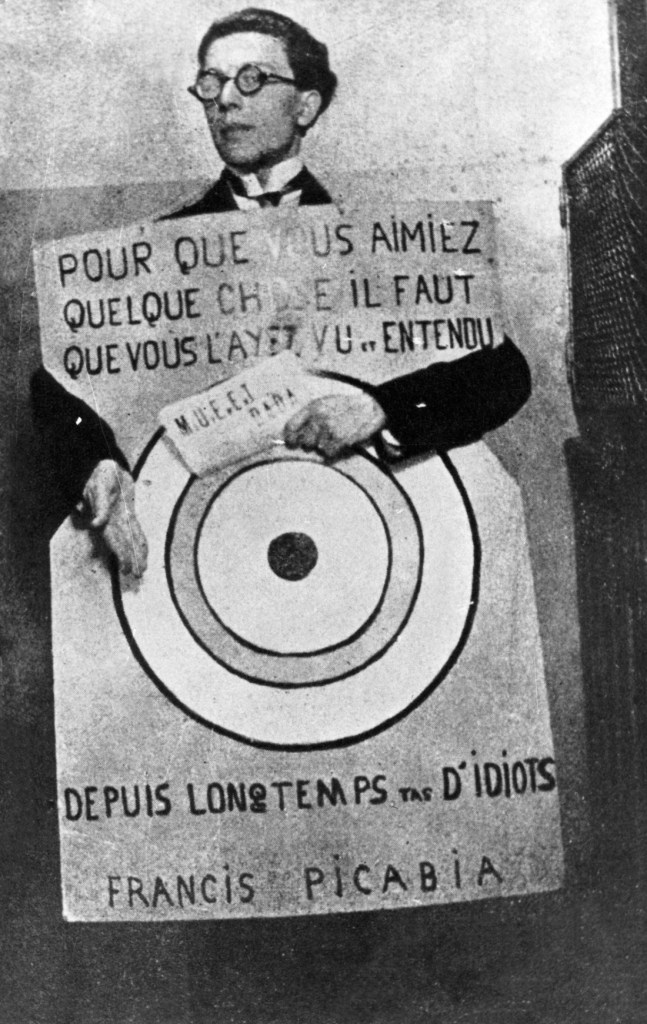
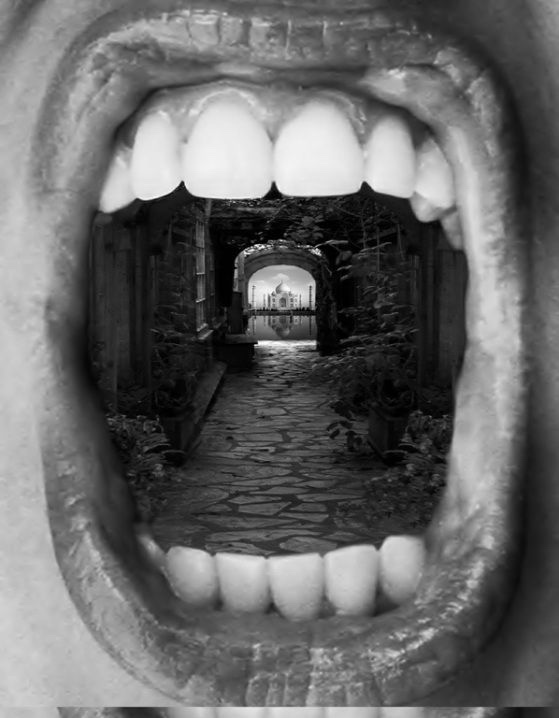
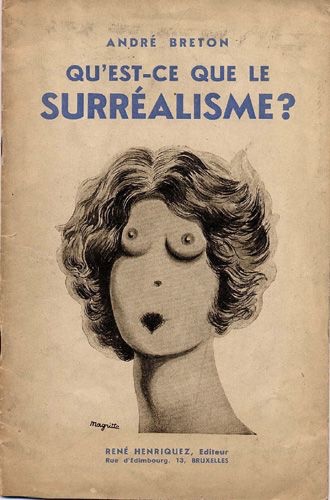
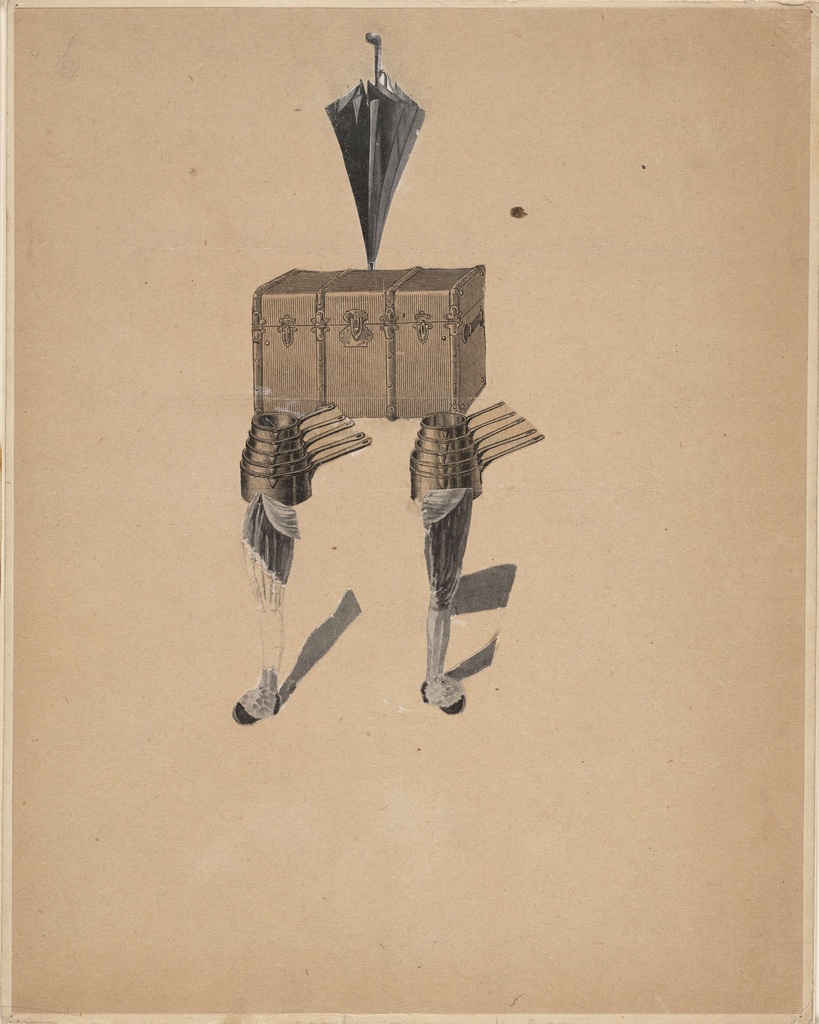
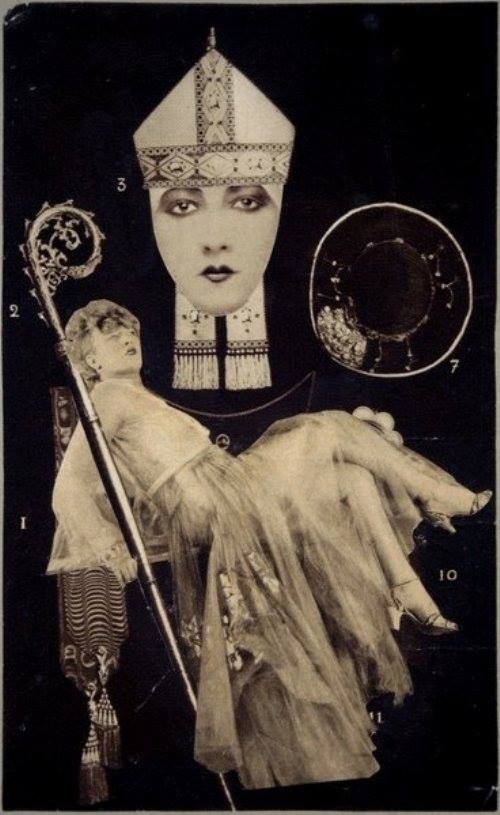
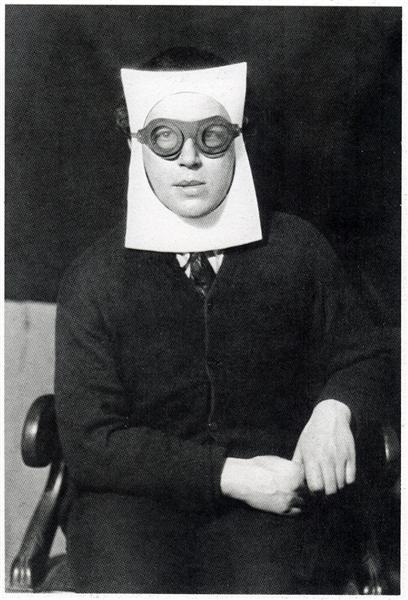
André Breton was an original member of the Dada group who went on to start and lead the Surrealist movement in 1924. In New York, Breton and his colleagues curated Surrealist exhibitions that introduced ideas of automatism and intuitive art making to the first Abstract Expressionists. He worked in various creative media, focusing on collage and printmaking as well as authoring several books. Breton innovated ways in which text and image could be united through chance association to create new, poetic word-image combinations. His ideas about accessing the unconscious and using symbols for self-expression served as a fundamental conceptual building block for New York artists in the 1940s. He pioneered the concept of fusing art and culture, which became a basic tenet in Pop Art. Breton’s use of the media as a tool of art practice also helped shape many contemporary artists who build personas as part of their work. In this way, he foresaw Performance Art, Fluxus, Conceptualism, and what has followed on from those movements. Perhaps above all, Breton’s love of absurdist humor continues to inspire artists to the present.
For my studio work I want to experiment with the same techniques he did – collecting various materials and construct something out of them even if they have no relation. This gives us the opportunity to create something new, to create something that doesn’t necessarily have any meaning whatsoever but in a way can open our minds as to what we were thinking when making it.
 My surreal world